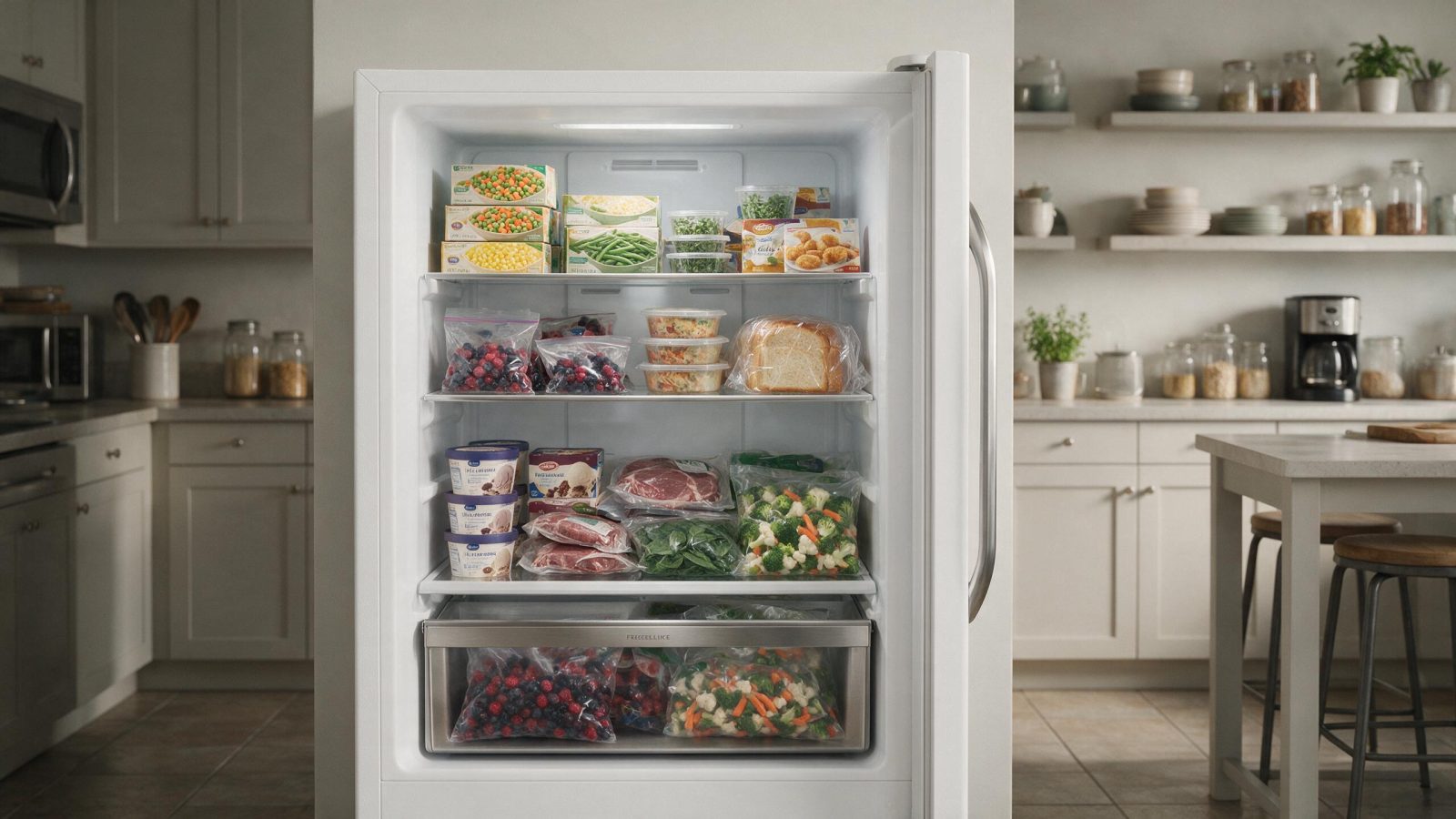
A refrigerator that cannot maintain safe temperature creates a food-storage decision before it creates a repair decision. The first step is to measure temperature and protect perishable food while you collect repair…
A refrigerator that is warming up is a food-storage problem first and a repair problem second. Measure temperatures, keep the doors shut, and move perishables to safe cold storage if the cabinet cannot hold temperature. Then check the simple external causes, and book diagnosis if temperatures continue to rise.
A refrigerator that cannot maintain safe temperature creates a food-storage decision before it creates a repair decision. The first step is to measure temperature and protect perishable food while you collect repair clues.
Frigidaire refrigeration spans French-door, side-by-side, top-freezer, bottom-freezer, compact, and other configurations. The exact model matters because airflow, ice/water layout, controls, and defrost strategy can differ. Measure temperatures instead of relying on display or touch alone.
If the refrigerator is built into tight cabinetry, keep ventilation clear and do not pull the unit out just to inspect it unless the service team asks.
Frigidaire’s not-cooling guidance lists a dedicated grounded outlet, a tripped GFI outlet, a room colder than about 55 degrees F, blocked vents, and a door left open or blocked. Each of those can be checked from outside without opening anything.
After a power loss, a full cool-down can take about 8 to 12 hours, and stabilizing may take up to 24 hours. Judge the unit after that, not right after power returns.
Do not bypass door switches, fans, sensors, or electrical controls to keep the unit running. If temperatures continue rising, arrange diagnosis.
Stop normal operation when there is smoke, sparking, burning electrical odor, repeated breaker trips, persistent gas odor, uncontrolled overheating, or water contacting electrical connections.
Do not bypass safety devices or open internal electrical, gas, sealed-refrigeration, or microwave high-voltage areas.
On many Frigidaire models, HI or H means the compartment has been too warm for over an hour, a door-ajar alarm sounds after a door has been open for more than 5 minutes, and PF points to a power outage or surge. Check your manual for your model’s alarm behavior.
The high-temperature alert can be cleared with the CLEAR ALERTS control, or by unplugging for 30 seconds, but clearing it does not fix the cause, so it should not be repeated as a routine.
| Symptom | What it can point to | What you can check |
|---|---|---|
| Display blinks HI or H | Too warm for an extended time | Check door closure and settings |
| Door-ajar tone | Door open too long | Close the door and check for blocking packages |
| PF displayed | Power outage or surge | Allow time to recover, then recheck temperatures |
| Both sections warm and the outlet seems fine | Cooling system or control | Keep doors closed and arrange diagnosis |
If the temperature rise stays gradual and the doors have been kept shut, note how many hours the unit has been warm, since duration is useful for the technician and for deciding what food to keep.
Send:
– the complete Frigidaire model number;
– the exact symptom;
– when it began;
– whether it is constant or intermittent;
– what still works normally;
– any displayed code or status message;
– any recent power, water, gas, venting, cleaning, or installation event.
These details help the technician choose a narrow test path instead of repeating owner-level checks.
For an adjacent symptom, read Frigidaire Refrigerator Warm but Freezer Cold: Follow the Airflow Clues and Frigidaire Ice Maker Not Making Ice: Temperature, Water, and Time Come First.
Frigidaire refrigerator complaints are easiest to narrow when the freezer and fresh-food sections are treated separately. A temperature log can show whether the cabinet never reaches the set range, reaches it and then drifts, or only warms after heavy door use. Those are different patterns.
If ice or water features changed at the same time as cooling, mention that too. The overlap can point toward a shared power, control, temperature, or water condition, but it should not be treated as proof of one failed part. Preserve any displayed `PF`, `HI`, temperature, or dispenser message before resetting because the meaning must be checked against the actual appliance family and model.
Do not clear a code before recording it, do not order a part only because another Frigidaire owner reported the same symptom, and do not create a new problem by moving a built-in appliance without a service plan. The exact model number is the bridge between the symptom and the correct technical information.
One controlled owner-level check is useful when it answers a question. Repeating resets, changing several settings at once, or disassembling the appliance usually removes evidence rather than adding it.
Use one normal manual-approved restart when appropriate. If the same symptom returns, repeated resets are not a repair and can erase useful evidence.
Usually not. Similar symptoms can come from different components, installation conditions, or external utilities.
No. Keep homeowner checks external and model-appropriate.
Frigidaire’s guidance says a full cool-down takes about 8 to 12 hours, with stabilizing up to 24 hours. If it is still warm after that, arrange service.
On many models it signals the compartment has been too warm for more than an hour. Check the manual for your model and note any other messages.
Move perishable food to cold storage and keep the doors shut. If there is smoke, a burning odor or repeated breaker trips, stop using it.
Use one normal manual-approved restart when appropriate. If the same symptom returns, repeated resets are not a repair and can erase useful evidence.
Usually not. Similar symptoms can come from different components, installation conditions, or external utilities.
No. Keep homeowner checks external and model-appropriate.
Visible arcing inside a microwave may be caused by metal, damaged accessories, food residue, a damaged waveguide-cover area, or an internal electrical/high-voltage problem. Continuing…
A hot-lint smell after a neglected filter is different from a sharp electrical odor, melting-plastic smell, smoke, or repeated overheating. A dryer should not…
A washer leak can begin at a hose, dispenser, door/gasket, pump area, or drain path. The safety concern rises when water spreads toward an…
Share a few details and we’ll confirm an appointment. Prefer to talk? Call us and we’ll help right away.
Fields marked with * are required.